// Overview
Keeping Pavement Joints Moving
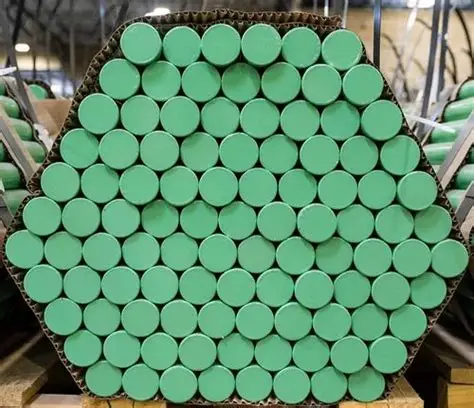
Concrete pavements are built as separate slabs so they can expand and contract with temperature without cracking. Dowel bars sit across these joints, transferring wheel load from one slab to the next while allowing horizontal movement — one end of each dowel is deliberately debonded so it can slide freely inside its slab.
If a plain steel dowel rusts, the expanding corrosion product locks the bar against the concrete, jamming the joint. The slab can no longer move, and thermal stress cracks the pavement at the joint instead. Epoxy coating keeps the sliding end free for the design life of the pavement, which is why it is a near-universal requirement on highway, expressway, and airport pavement specifications.
- Smooth (undeformed) bar surface for controlled slip at the debonded end
- Coating applied over the full bar length, including the embedded end
- Cut and chamfered ends to prevent coating damage during placement
- Supplied with or without pre-fitted end caps and sleeves for the sliding end
- Standard lengths matched to NHAI and MoRTH pavement joint details
Specification Snapshot
Diameter range
25, 32, 36, 40 mm
Bar type
Smooth (plain) round bar
Coating standard
IS 13620 (FBE)
Typical length
450–500 mm
End treatment
Chamfered, cap/sleeve optional
Governing specs
NHAI / MoRTH pavement joint details
Request This Product